
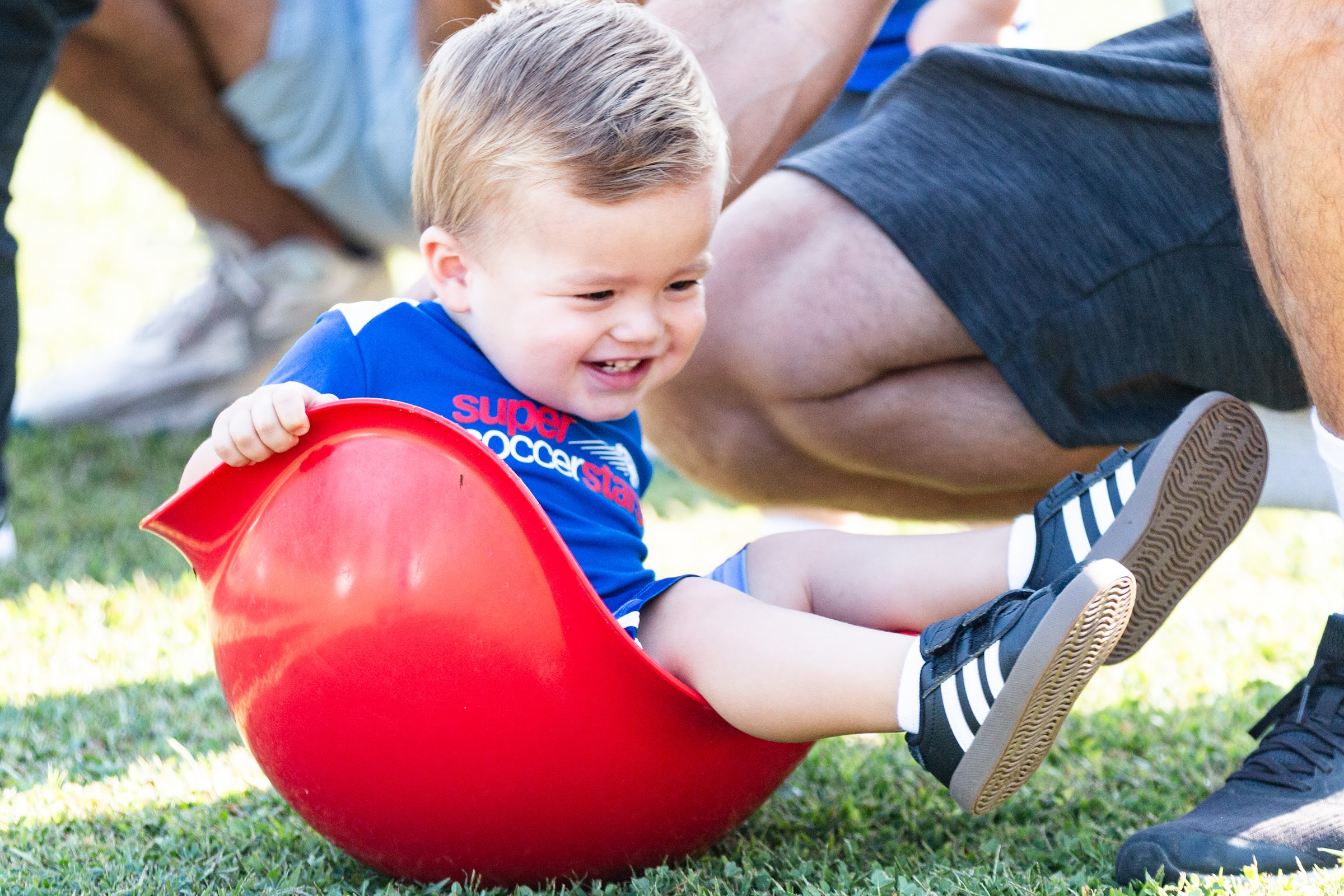
When a child waits for a turn, remembers a game rule, or pauses before moving, the activity asks them to do more than stay busy. Harvard’s Center on the Developing Child explains that playful activities can give children practice with attention, working memory, and self-control. Harvard’s guide to learning through play.
Playing with other children also creates opportunities to cooperate, lead, follow, and solve problems. The American Academy of Pediatrics emphasizes that learning to play with others takes time and practice. AAP guidance on what children learn through play.
Notice the moments between the big moments
You do not need to count goals or compare your child with the child beside them to learn something about a class. Try watching for opportunities:
- A turn: Is there a chance to wait, watch, and join in?
- A rule: Does the activity give children something simple to remember?
- A retry: Can a child try again with encouragement?
- A choice: What captures your child’s interest enough that they want another go?
These are questions for choosing an experience, not a scorecard for your child. They work at the park, in a game at home, or when watching an enrichment class. Different children may enjoy different parts.
Make the next step small
An enrichment class can offer a regular setting for this kind of practice. Trying one class gives your family something concrete to respond to: the activity, the group, the instructor, and how the experience fits your week.
Soccer Stars and Karate Zoo offer free trials at our published partner-school and public-enrollment locations. School enrollment or membership requirements still apply. Single-day drop-ins are also available at most locations. Check the location’s next step before making the trip.
The research above describes play in general. It does not measure the developmental effects of a particular Mile High Kids Collective course.